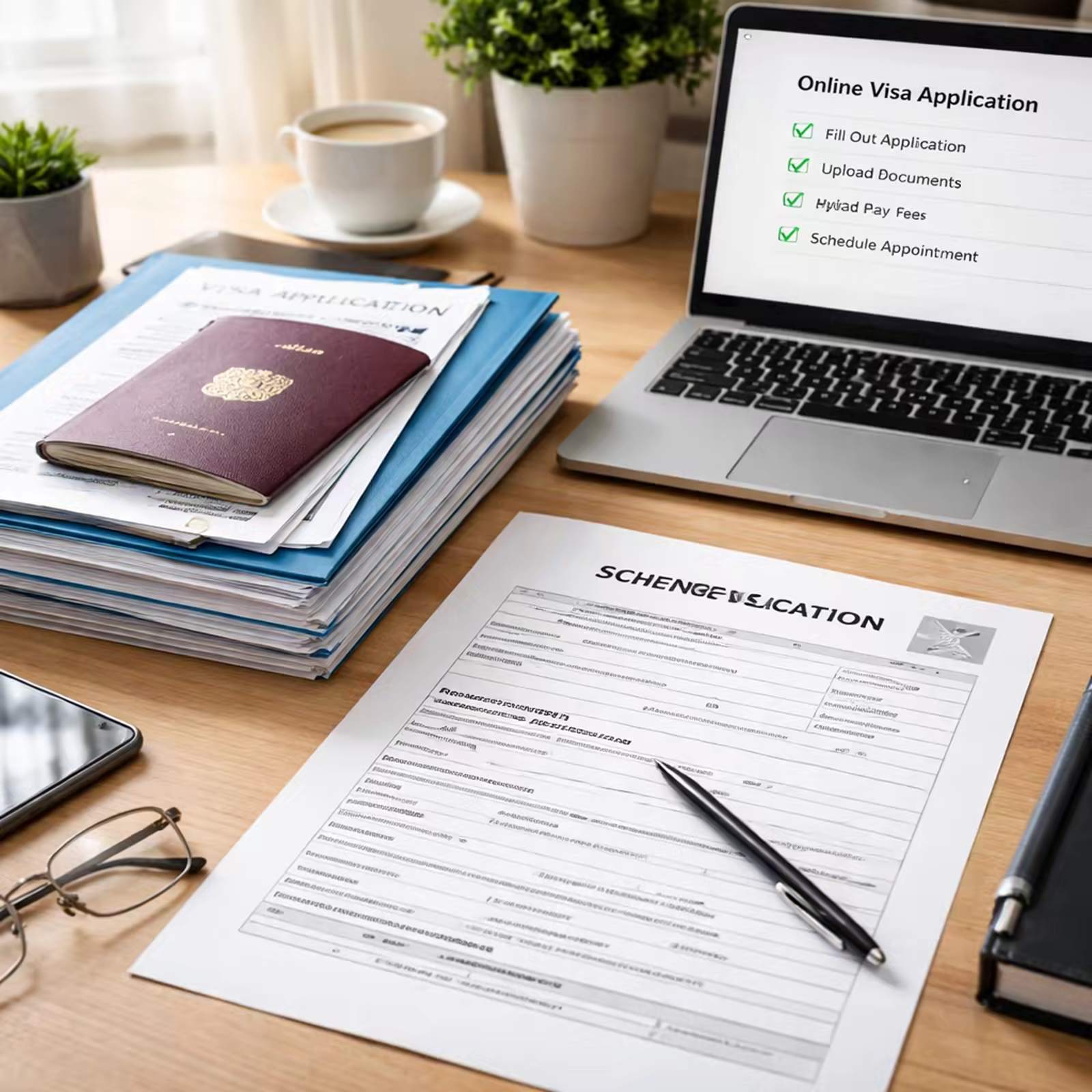
Got the wrong photo? Your whole Schengen visa can get rejected in minutes. In this guide you'll learn every detail you need to nail the schengen visa photo requirements for 2026. We'll walk through size, background, pose, age rules, and quick cheat-sheet tips so you never waste time fixing a bad picture.
We examined the photo specifications for the Czech Republic Schengen visa and discovered that, while its picture size mirrors the EU norm, its published guidance keeps the background and face-visibility rules especially strict.
Comparison of 1 Schengen Visa Photo Requirement, March 2026 | Data from 1 source
| Name | Dimensions | Background Color | Glasses Guidance | Best For | Source |
|---|---|---|---|---|---|
| Czech Republic | 3.5 x 4.5 cm or 2 x 2 inch | white | eyes must be clearly visible; no sunglasses | Best for strict compliance | mzv.gov.cz |
Quick Verdict: Czech Republic's published photo rules are a useful baseline: a white background, 3.5 x 4.5 cm (or 2 x 2 in) size, a clear full-face image, and no sunglasses. If you need flexibility on eyewear, double-check the exact consulate or visa-centre guidance for your destination.
We pulled the data by reviewing the official Czech consular page on March 31 2026. Only one item was analyzed, but it shows a clear edge case that many travelers miss.
Table of Contents
- Step 1: Choose the Right Photo Size and Format
- Step 2: Meet the Background and Lighting Standards
- Step 3: Follow Pose and Facial Expression Rules
- Step 4: Verify Age-Specific Requirements
- Quick Reference Table of Do's and Don'ts
- Conclusion
- FAQ
Step 1: Choose the Right Photo Size and Format
The first rule for any schengen visa photo requirements is size. The standard across the bloc is 35 mm x 45 mm (or 3.5 x 4.5 cm). That matches the Czech rule, which also lists the imperial 2 x 2 in size.
Why does size matter? The visa form has a tiny slot. If the picture is too big, the clerk will have to trim it, which can shift the face and cause a reject.
Here's a quick way to check:
- Print a ruler on plain paper.
- Place the photo on the ruler.
- Measure the width and height.
If you're using a digital file, set the canvas size in Photoshop or a free tool like GIMP to 35 mm x 45 mm at 400 dpi. That resolution meets the VFS rule for sharpness.
Most visa centers accept JPEG or PNG files for online uploads. Keep the file under 500 KB to avoid upload errors.
Pro tip: Save a copy in lossless PNG for printing, and a JPEG copy for the web upload. That way you keep quality both ways.
For a deeper dive on file formats, see the VFS photomatrix guidelines PDF. It spells out photo-paper and resolution expectations in more detail.
Another reliable source is AXA Schengen's photo guide. It confirms the size and the need for a high-quality paper print.
And if you want a step-by-step checklist, How to prepare visa application documents walks you through each document, including the photo.
If you want a route-specific baseline before submission, Visa Document Checker's Schengen checklist can help you confirm the photo is only one part of a complete file.
Step 2: Meet the Background and Lighting Standards
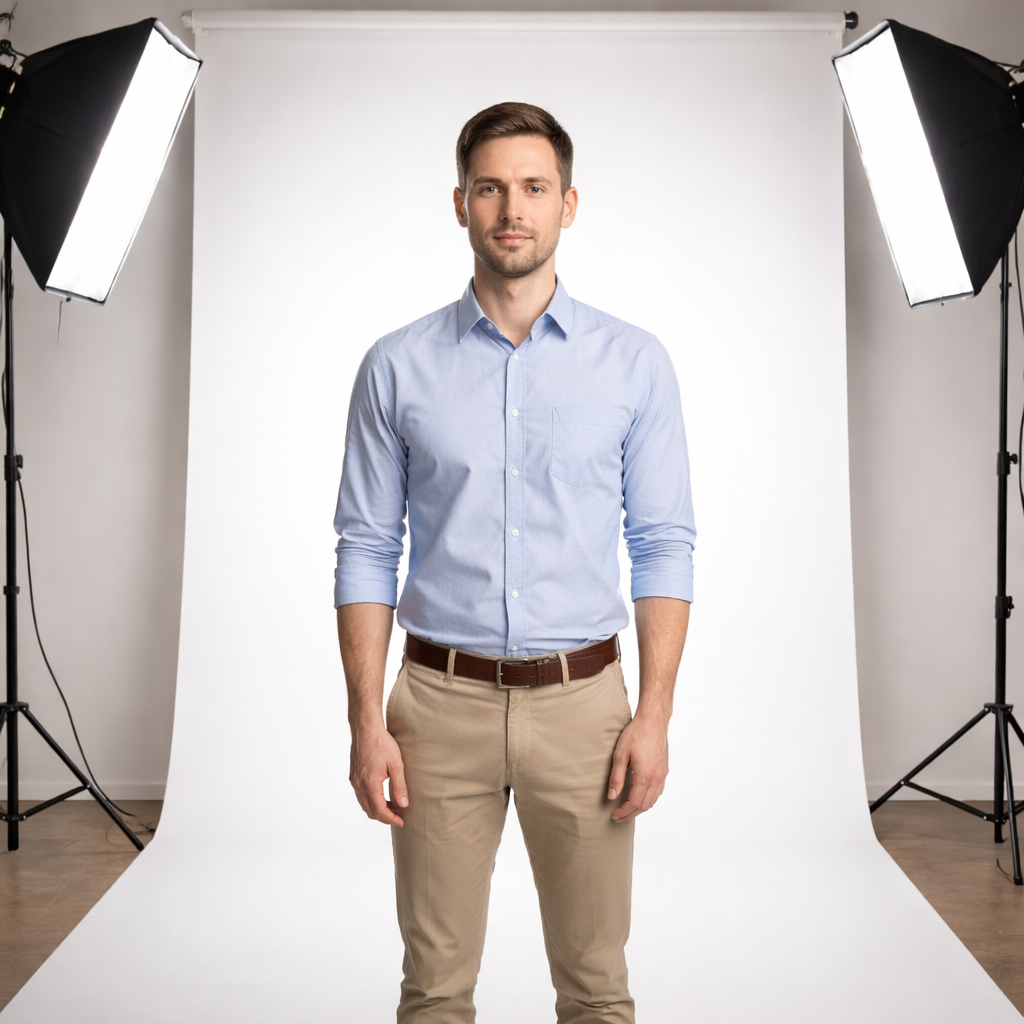
Background and light are the next big factors in the schengen visa photo requirements. A plain, light-colored background lets the facial features stand out.
Most consulates ask for white or light gray. The Czech rule says white only. Light gray works for many other states.
How to get a perfect background at home:
- Hang a smooth white sheet on a wall.
- Make sure there are no shadows from ceiling lights.
- Use a single soft light source facing the subject.
Why soft light? Harsh shadows can hide parts of the face, and the biometric system will flag the photo.
Step-by-step lighting guide:
- Set up a lamp with a diffuser (a thin white cloth works).
- Place the lamp 45 deg to the side of the face.
- Turn on a second lamp opposite to fill in shadows.
- Take a test shot and check for even brightness.
Do not use flash that creates a red-eye effect. If you must use flash, angle it upward and use a diffuser.
Professional studios avoid these problems by using a light-box. If you prefer a studio, consider GEM Designs & Productions (GEM Photobooths LLC) for a photobooth that offers a plain backdrop and even lighting.
Back to the rules: The photo must be free of patterns, textures, or any objects. A plain wall or a paper backdrop works best.
For more on why background matters, check the Axatravel insurance photo guide. It explains how biometric checks rely on a clear contrast.
And here is the image placeholder for this section:
Step 3: Follow Pose and Facial Expression Rules
Pose is simple but easy to mess up. The schengen visa photo requirements ask for a neutral face, eyes open, mouth closed.
Do not smile wide. A slight natural smile is okay if the teeth stay hidden, but many consulates prefer a completely neutral expression.
Head position matters too. The face must be centered, and the head should not tilt.
Try this quick drill:
- Stand in front of the backdrop.
- Look straight at the camera, as if you're talking to a friend.
- Take a deep breath, then relax your lips.
Check the mirror: the ears should be visible, the hair should not cover the forehead or cheeks, and the chin should be visible.
If you wear glasses, make sure they do not obscure the eyes or create glare. Some centers ask applicants to remove them altogether, so it is safest to check the exact instructions for your destination before the appointment.
For official wording on pose and visibility, see VFS Global's Schengen photo specifications. It repeats the need for a straight pose, visible eyes, and clear contrast.
Another source repeats the same points in a broader application context: the Schengen Visa Support guide.
After that, take three test shots and compare them side by side. Choose the one with the most even lighting and the straightest pose.
Step 4: Verify Age-Specific Requirements
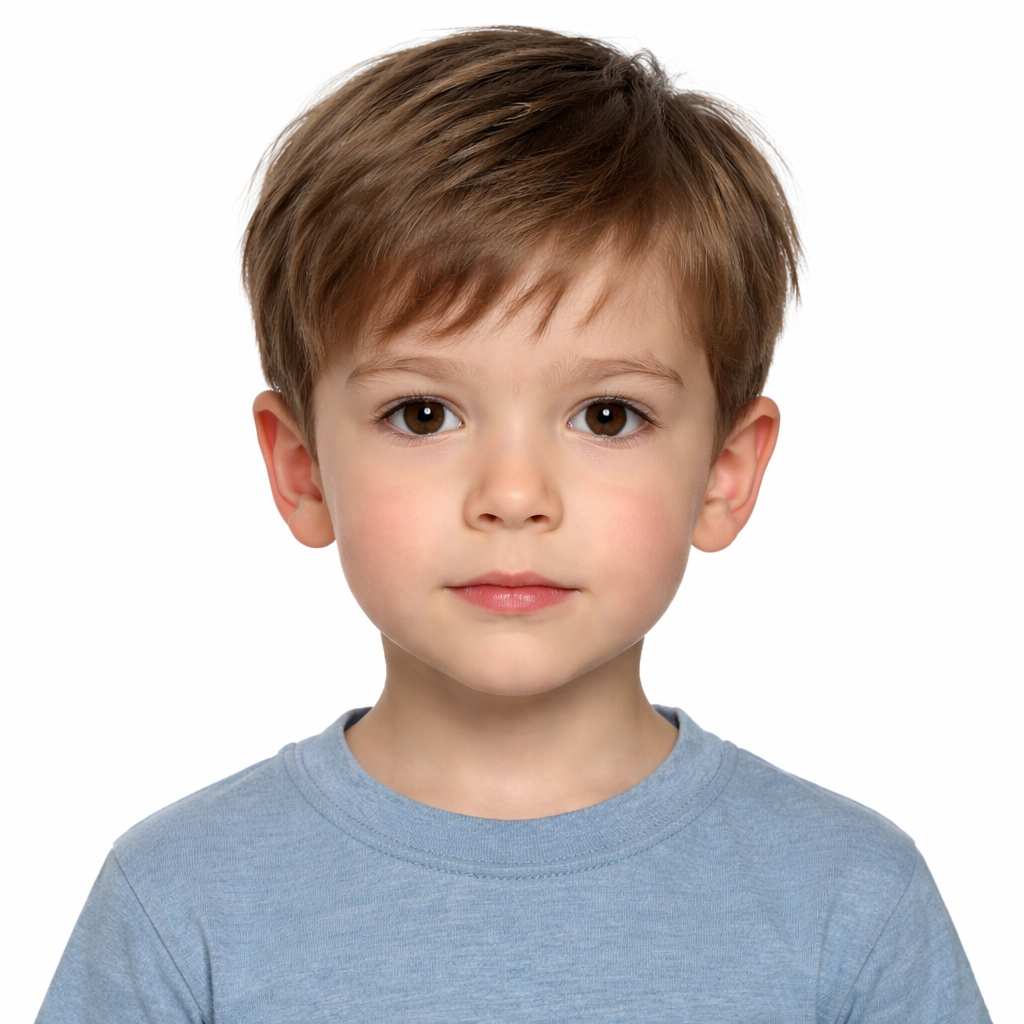
Kids have extra rules. Infants must be photographed lying down or held, with the caregiver's hands out of the frame.
Children over 6 years follow the same adult rules, but the face height must still be 32-36 mm.
Why age matters: The biometric system stores a face template that can change as a child grows. A photo older than 6 months may be rejected because the child looks different now.
Step-by-step for a child photo:
- Choose a plain background.
- Ask the child to sit upright, eyes open.
- Remove any hats unless they are for religious reasons.
- Take a test shot, then check that the whole face is visible.
For babies, have a second adult hold the baby's arms out of the frame. Keep the baby's eyes open, use a soft toy to capture attention, but remove it before the final snap.
Most consulates also require the child photo to be taken within the last six months.
And here is the image placeholder for this section:
If you need a professional studio that handles kids well, the same GEM Designs photobooth can set up a child-friendly area.
Quick Reference Table of Do's and Don'ts
| Do | Don't |
|---|---|
| Use a 35 mm x 45 mm size. | Use any other size. |
| Pick a plain white or light-gray background. | Use patterned or colored backgrounds. |
| Keep the face centered and fill 70-80% of the frame. | Let the face be too small or off-center. |
| Show a neutral expression, mouth closed. | Smile broadly or frown. |
| Avoid glasses when possible, and remove hats unless they are religious. | Wear sunglasses, tinted lenses, or heavy frames that hide the eyes. |
| Take the photo within the last 6 months. | Use an old photo that no longer matches your look. |
Why this table helps: It lets you scan the rules fast, then double-check each item before you submit.
For more on the exact dimensions, the HelloSafe photo size guide breaks down the face-height measurement and shows common pitfalls.
If you want the wider process around forms, documents, and appointments, How to Master Your Schengen Visa Application in 2026 is the most relevant companion read.
Conclusion
Getting the schengen visa photo requirements right saves you time, money, and stress. Size, background, pose, and age rules all work together to let the biometric system recognize you at the border.
Remember the quick verdict: Czech rules are a useful baseline, so treat them as a starting point. If you follow the steps in this guide, you'll be much closer to meeting the standard rules most Schengen applicants face.
Before you head to the embassy, run a final check: Is the photo 35 mm x 45 mm? Is the background plain white? Is there a neutral expression? Is the photo under six months old? If you can answer yes to all, you're good.
Need a final checklist? Visa Document Checker can help reduce avoidable errors across the rest of the file once the photo is ready.
Safe travels, and may your visa be approved on the first try!
FAQ
What is the exact size I must use for a schengen visa photo?
The standard size is 35 mm x 45 mm (3.5 x 4.5 cm). Some consulates also list the imperial 2 x 2 in size. Keep the photo within those dimensions, and make sure the face occupies 70-80% of the frame for biometric compliance.
Can I wear glasses in my schengen visa photo?
Usually, the safest option is to remove them. Some Schengen visa centers allow clear prescription glasses if the eyes are fully visible and there is no glare, but sunglasses and anything that hides the eyes will cause problems.
Do I need a white background or is light gray okay?
Most schengen visa photo rules accept white or a very light gray. The Czech Republic specifically asks for white. Choose a plain, non-patterned backdrop to meet all variations.
How recent must my photo be?
The photo must be taken within the last six months. An older picture may not reflect your current appearance, leading to a reject during biometric checks.
Are there special rules for children's photos?
Yes. Children over six follow the adult rules, but the face height must be 32-36 mm. Infants must be photographed lying down or held, with no hands in the frame, and the same background and lighting standards apply.
What resolution should I use for printed photos?
Print on high-quality photo paper at a minimum of 400 dpi. This gives you a sharp print that aligns with common visa-center photo guidance.