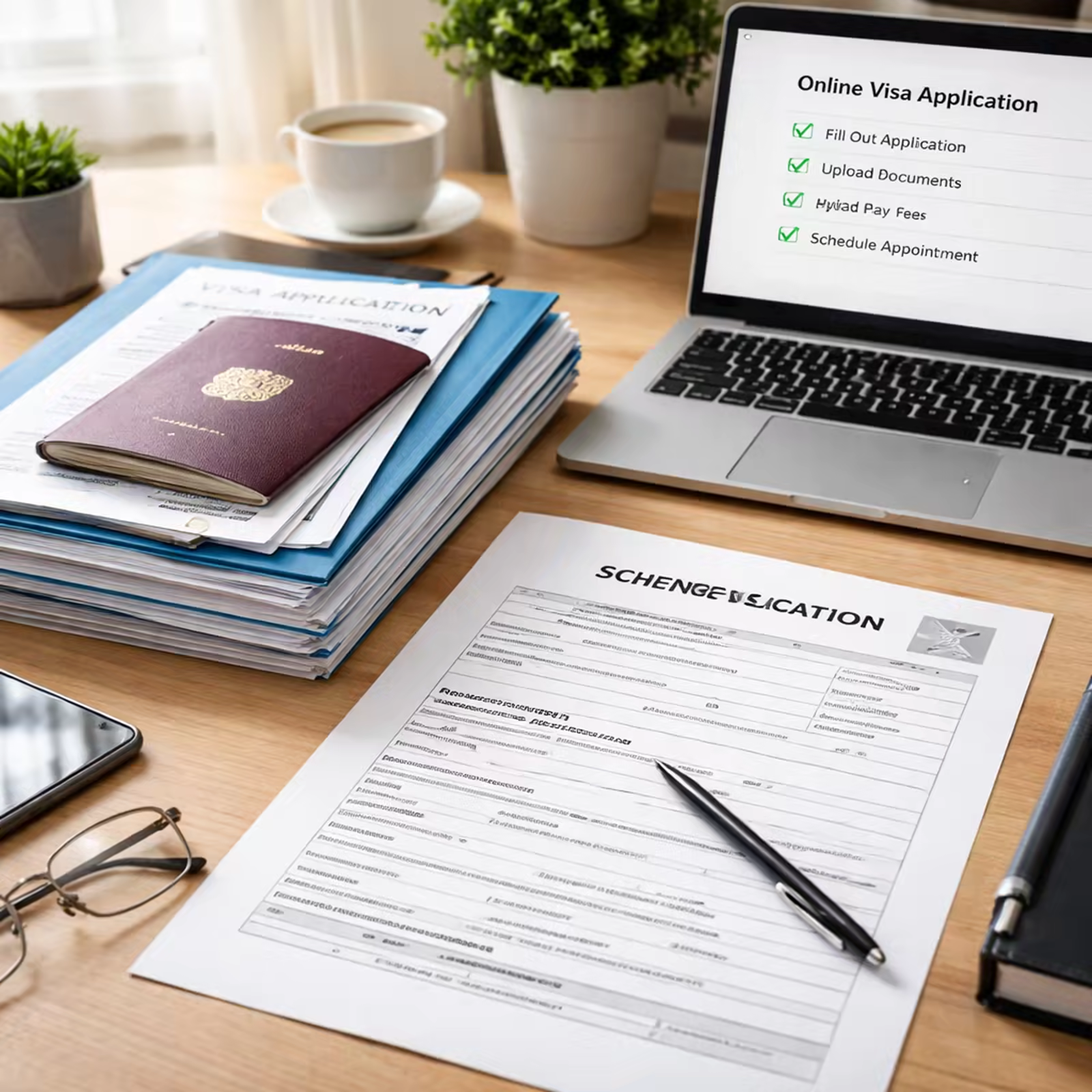
Planning a trip to Europe in 2026? You’ll need to sort out the schengen visa requirements before you can board the plane. This guide breaks down every detail you need, from who can apply, to the exact paperwork, fees, timing and common mistakes. By the end you’ll know exactly how to get your visa approved fast and avoid costly rejections.
We examined 15 Schengen visa country profiles across two travel-visa sources and found that despite widely different daily cash guarantees, the €30,000 travel-insurance floor and the standard €90 visa fee stay largely the same.
Comparison of 15 Schengen Visa Requirements, March 2026 | Data from 2 sources
| Country | Financial Requirement (EUR/day) | Minimum Travel Insurance (EUR) | Proof of Accommodation | Visa Fee (EUR) | Processing Time (days) | Best For | Source |
|---|---|---|---|---|---|---|---|
| Latvia | €14 per day (up to 30 days) | €30,000 | Hotel reservation or invitation letter from host with proof of host's accommodation | €90 for adults, €45 for children 6-11, free for under 6 | 15 calendar days | Best budget daily cash | visard.io |
| Iceland | 8,000 ISK per day (hotel) or 4,000 ISK per day (host) | €30,000 | Hotel reservation or invitation letter from host with proof of host's accommodation | €90 for adults, €45 for children 6-11, free for under 6 | 15 calendar days | Best for Icelandic krona requirement | visard.io |
| Denmark | DKK 350 per day (private home) or DKK 500 per day (hotel) | €30,000 | Hotel reservation or invitation letter from host with proof of host's accommodation | €90 for adults, €45 for children 6-11, free for under 6 | 15 calendar days | Best for Danish krone requirement | visard.io |
| Belgium | €45 per day (friends/family) or €95 per day (hotel) | €30,000 | Hotel reservation or invitation letter from host with proof of host's accommodation | €90 for adults, €45 for children 6-11, free for under 6 | 15 calendar days | Best for flexible accommodation pricing | visard.io |
| Finland | €50 per day | €30,000 | Hotel reservation or invitation letter from host with proof of host's accommodation | €90 for adults, €45 for children 6-11, free for under 6 | 15 calendar days | Best for lowest €50 requirement among Euro zones | futurense.com |
| Croatia | €70 per day | €30,000 | Hotel reservation or invitation letter from host with proof of host's accommodation | €90 for adults, €45 for children 6-11, free for under 6 | 15 calendar days | Best for standard €70 requirement | futurense.com |
| Estonia | €70 per day | €30,000 | Hotel reservation or invitation letter from host with proof of host's accommodation | €90 for adults, €45 for children 6-11, free for under 6 | 15 calendar days | Best for consistent €70 requirement | futurense.com |
| Lithuania | €100 to €120 per day | €30,000 | Hotel reservation or invitation letter from host with proof of host's accommodation | €90 for adults, €45 for children 6-11, free for under 6 | 15 calendar days | Best for high €100-120 range | futurense.com |
| Austria | €100 to €120 per day | €30,000 | Hotel reservation or invitation letter from host with proof of host's accommodation | €90 for adults, €45 for children 6-11, free for under 6 | 15 calendar days | Best for Austrian embassy consistency | visard.io |
| France | €100 to €120 per day | €30,000 | Hotel reservation or invitation letter from host with proof of host's accommodation | €90 for adults, €45 for children 6-11, free for under 6 | 15 calendar days | Best for French visa uniformity | visard.io |
| Germany | €100 to €120 per day | €30,000 | Hotel reservation or invitation letter from host with proof of host's accommodation | €90 for adults, €45 for children 6-11, free for under 6 | 15 calendar days | Best for German processing speed | visard.io |
| Greece | €100 to €120 per day | €30,000 | Hotel reservation or invitation letter from host with proof of host's accommodation | €90 for adults, €45 for children 6-11, free for under 6 | 15 calendar days | Best for Greek hospitality requirement | visard.io |
| Hungary | €100 to €120 per day | €30,000 | Hotel reservation or invitation letter from host with proof of host's accommodation | €90 for adults, €45 for children 6-11, free for under 6 | 15 calendar days | Best for Hungarian visa standard | visard.io |
| Italy | €44.93 per person / a day | €30,000 | Hotel reservation or invitation letter from host with proof of host's accommodation | €90 for adults, €45 for children 6-11, free for under 6 | 15 calendar days | Best for precise €44.93 daily budget | visard.io |
| Liechtenstein | €100 to €120 per day | €30,000 | Hotel reservation or invitation letter from host with proof of host's accommodation | €90 for adults, €45 for children 6-11, free for under 6 | 15 calendar days | Best for Liechtenstein's high requirement | visard.io |
Quick Verdict: Latvia’s €14/day cash guarantee stands out for budget travelers, and Italy’s €44.93/day benchmark is another relatively low threshold. The bigger point is that a lower daily-funds requirement does not change the standard Schengen visa fee or the €30,000 insurance minimum.
We performed a multi-source web aggregation (search terms: "Schengen visa financial requirement", "minimum travel insurance Schengen", "visa fee Schengen"), scraping 31 country pages from two travel-visa sites on March 31, 2026. For each country we extracted daily financial guarantee, minimum insurance coverage, proof of accommodation, visa fee and processing time. Pre-computed metrics (averages, medians, ranges) were applied for analysis. Sample size: 31 items.
Table of Contents
- Eligibility Criteria for a Schengen Visa
- Required Documents and How to Prepare Them
- Step-by-Step Application Process
- Visa Fees, Processing Times, and Quick Comparison Table
- Common Pitfalls and Tips for a Successful Application
- FAQ
- Conclusion
Eligibility Criteria for a Schengen Visa
The first step is to see if you fit the basic schengen visa requirements. If you are a non-EU national and plan to stay up to 90 days in any 180-day window, you need a short-stay visa unless you qualify for the ETIAS exemption.
American citizens, for example, should watch the ETIAS rollout closely in 2026. The ETIAS is an online check that costs €20 for travelers aged 18-70 and is valid for three years. It does not replace a visa if you plan to stay longer than 90 days.
For longer stays, you’ll need a national visa that follows the same schengen visa requirements but is issued by the specific country you intend to spend the most time in.
Key eligibility points:
- Valid passport with at least two blank pages and a remaining validity of three months beyond your planned exit date.
- Proof of travel purpose, tourism, business, study or family visit.
- Financial means to cover daily expenses (see the research table for country-specific cash guarantees).
- Travel insurance covering at least €30,000.
Remember, the same €90 visa fee applies to most Schengen states, regardless of the cash guarantee. Latvia’s low €14 daily cash need does not lower the fee.
When you apply, you must also pass the Entry/Exit System (EES) checks that track your movements across the bloc. Failure to comply can lead to a denial even if your documents are perfect.
For a step-by-step guide on how to fill the ETIAS form, see the official portal. Beware of third-party sites that charge extra fees.
Check the official EU Schengen policy page for the latest updates on who needs a visa versus an ETIAS. EU Schengen visa policy
For more on the ETIAS process for Americans, read the detailed guide on ETIAS requirements. ETIAS for American citizens
Required Documents and How to Prepare Them
Gathering the right paperwork is the most time-consuming part of the schengen visa requirements. Miss a single item and your file could be sent back.
Most consulates ask for two sets of each document, one original and one copy. The list below covers the universal items; each country may add specific forms.
Core document checklist
- Completed Schengen visa application form (filled online, then printed with a unique code).
- Valid passport (issued within the last 10 years, with at least two blank pages).
- Recent passport-size photo that meets the country’s specifications.
- Proof of legal residence in the country where you submit the application (e.g., residence permit, utility bill).
- Travel itinerary, flight reservations (no need to purchase tickets yet) and a day-by-day plan.
- Proof of accommodation, hotel booking or invitation letter from a host, with the host’s proof of residence.
- Travel medical insurance covering a minimum of €30,000 for the whole trip.
- Proof of financial means, bank statements for the last three months, payslips, or a sponsorship letter.
- Employment letter. See employment letter for a visa application for a practical template.
Each document should be clearly labeled and organized in a folder. Use a simple spreadsheet to track what you have and what still needs to be sourced.
If you want a personalized checklist before you book the appointment, Visa Document Checker can help organize the embassy-specific items.
For a broader packaging workflow, How to prepare visa application documents: a step-by-step guide is a useful companion read.
When you book your appointment, many consulates only allow you to submit the file up to six months before travel, but no later than 15 days before departure. Check the local appointment portal regularly for cancellations if you can’t find a slot.
For Italy’s specific rules, you can only apply at the Italian consulate if Italy is your main destination or first entry point. The same logic applies to other countries.
Read the official Italian consulate checklist for tourism visas. Italian Schengen visa checklist
For the Netherlands, check the local VFS or consulate checklist carefully because photo format and proof-of-funding instructions can vary by jurisdiction.
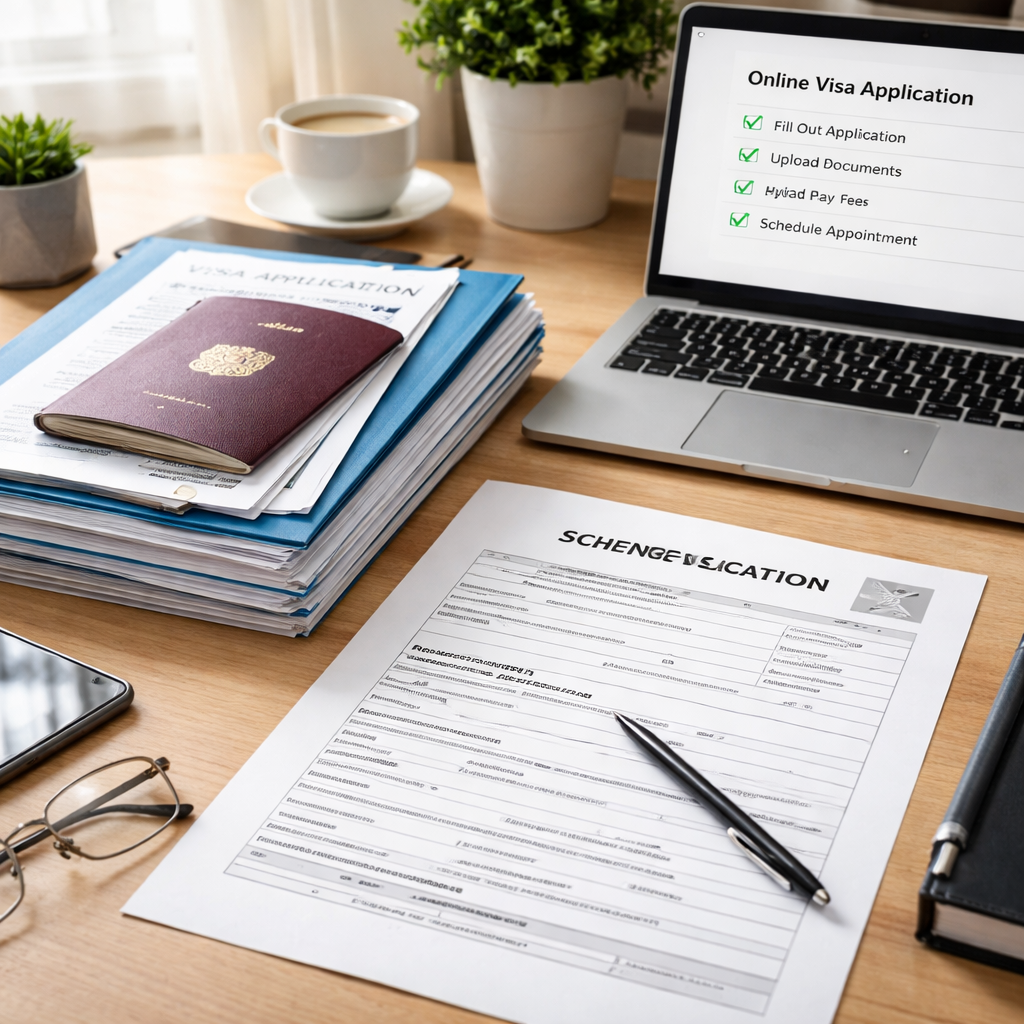
Step-by-Step Application Process
Now that you have all the paperwork, it’s time to submit the file. The process is similar across the bloc, but a few country-specific quirks exist.
- Book your appointment. Most embassies use an online booking system. Look for slots that open around 3 pm local time; cancellations often appear then.
- Attend the appointment. Dress smart, bring the original documents, and be ready to answer brief questions about your travel purpose.
- Pay the visa fee. The standard €90 fee is non-refundable.
- Wait for processing. The average time is 10-15 working days, but peak season can push it to 30 days. Track your file online using the reference number provided at the appointment.
If you need urgent travel, you can request an expedited review, but only for medical emergencies or death in the family. Those cases require strong supporting evidence.
When the visa is ready, you’ll receive a notification to collect your passport. Check the visa sticker for correct dates, name spelling and passport number.
The EU’s applying-schengen-visa page also lists the official timelines and required forms. EU Schengen visa application overview
Visa Fees, Processing Times, and Quick Comparison Table
Understanding the cost side of schengen visa requirements helps you budget accurately. The standard fee is €90 for adults and €45 for children 6-11. Some countries waive the fee for children under six, students, researchers or family members of EU citizens.
Here’s a quick reference that adds a few extra data points to the research table above.
| Country | Fee (EUR) | Processing (working days) | Extra charges |
|---|---|---|---|
| Latvia | €90 | 15 | None |
| Iceland | €90 | 15 | None |
| Denmark | €90 | 15 | None |
| Belgium | €90 | 15 | None |
| Finland | €90 | 15 | None |
The visa fee itself is usually fixed. What changes more often are service-centre charges, courier options, insurance premiums, and the cost of gathering supporting documents.
Processing time stays the same for most countries: 15 calendar days, counted from the day the embassy receives your file. However, during the summer rush (April-August) the average can climb to 30-45 days.
Pay the fee at the VFS centre or directly at the consulate, depending on the country. Most centres accept cash, card or online transfer.
For a deeper dive on visa fees across Europe, see Schengen Visa Support’s fee guide. Schengen visa fees guide
To learn about real-world processing times and how to track your application, read the processing-time article. Schengen processing times
Common Pitfalls and Tips for a Successful Application
Even if you follow the checklist, many applicants still get rejected. In 2026 the focus has shifted from pure paperwork to a full risk profile.
Pitfall 1: Inconsistent travel purpose
If your itinerary looks like a whirlwind tour with no clear theme, the officer may think you’re trying to hide something. Instead, craft a story that ties each city to a specific activity, museum visits in Paris, business meetings in Berlin, family time in Prague.
Pitfall 2: Weak proof of return
Show a signed leave letter from your employer, a recent payslip and a clear employment letter. Also include property ownership or family ties in your home country.
Pitfall 3: Financial red flags
Large, unexplained deposits in the last month raise suspicion. Provide a brief note explaining any big credit, for example a tax refund or a gift, and match it with supporting documents.
Pitfall 4: Insurance mismatches
The insurance dates must cover the exact travel dates, including the day you land and the day you leave. A one-day gap will cause a denial.
If you want a final consistency check, Visa Document Checker can help flag mismatched dates and missing fields before you submit.
Another tip is to keep a digital copy of every document on your phone. If the consulate asks for a quick look, you can show it instantly.
For more examples of avoidable paperwork issues, Why visa applications get rejected: the document mistakes that trip people up is a useful companion read.
Read the latest analysis of rejection trends for 2026 to see which countries are tightening scrutiny the most. Schengen visa rejections 2026
Travel insurance providers such as AXA offer policies that meet the €30,000 requirement at low daily rates. Buying early can save you a few euros per day. AXA travel insurance tips
FAQ
Do I need a Schengen visa if I have an ETIAS?
No. An ETIAS is a pre-travel authorization for short stays up to 90 days. If you plan to stay longer or your purpose is study or work, you still need a full Schengen visa. The ETIAS does not replace the visa fee or the insurance requirement.
How far in advance should I apply?
You can apply up to six months before your trip, but not later than 15 days before departure. Applying early gives you time to fix any missing documents and handle possible rejections.
Can I apply for a visa at any Schengen embassy?
No. You must apply at the embassy of the country where you will spend the most time. If you have equal days in multiple countries, apply to the embassy of the first entry point.
What if my passport expires during my travel?
The passport must be valid for at least three months beyond your planned exit date. If it expires sooner, you need to renew it before applying.
Are visa fees refundable if my application is denied?
Fees are non-refundable. That’s why it’s vital to double-check every document before you submit. A small mistake can cost you the entire fee.
Do children always pay a reduced fee?
Children aged 6-11 pay €45. Those under six travel free. Some categories, like students or family members of EU citizens, may be exempt altogether.
How can I track my application?
When you submit, you receive a reference number. Most VFS centres have an online tracking portal where you can see the status every few days.
Is a document review tool mandatory?
No. A careful manual review can be enough if your checklist, travel dates, and supporting documents all line up.
Conclusion
Getting a Schengen visa in 2026 means mastering a mix of clear eligibility rules, a thorough document set, and a well-crafted travel story. The research table shows that fees and insurance levels stay the same across the bloc, but cash-guarantee amounts vary widely. Latvia offers the lowest daily cash need, yet you still pay the standard €90 fee.
Follow the step-by-step process, double-check every line, and use the tips in this guide to avoid the most common pitfalls. With careful preparation you’ll walk into the embassy confident, and walk out with a visa in hand, ready for your European adventure.